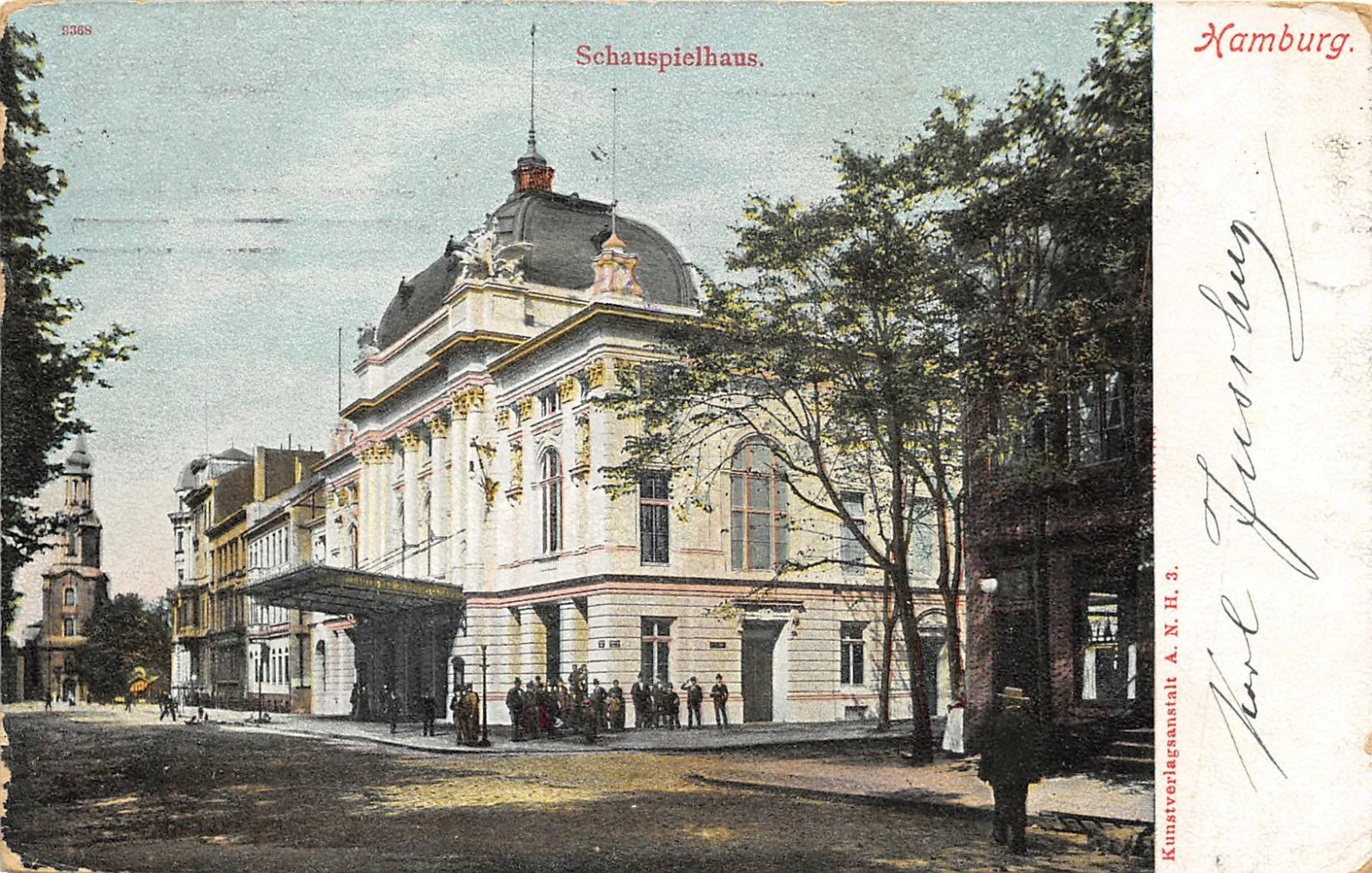
In 1946, after seven years of English exile and a period of internment on the Isle of Man as an "enemy alien", Arthur Hellmer was invited back to Germany as Intendant of the Deutsches Schauspielhaus in Hamburg — the largest drama theater in the country and one of the most important houses of the German-speaking world.
A city in ruins
The Hamburg Hellmer returned to in July 1946 was a city of rubble and dread. Of the pre-war stock of some 16,000 theater seats, three-quarters had been destroyed in the Allied bombing. The Schauspielhaus building itself had survived almost intact — but it had been requisitioned as the British Garrison Theater to entertain occupying troops and was unavailable to a German ensemble. There was also a serious public argument as to whether a heavily subsidised theater system, of a kind that did not even exist in the victorious democracies, could be morally defended at all in the country that had brought such destruction on the world. Politicians and artists fought for the preservation of the houses; the British, while granting the Germans relative autonomy in cultural matters, kept a decisive voice in the choice of the new Generalintendant — and chose Hellmer for his commercial record, his artistic standing, and his long association with expressionist drama.
The Besenbinderhof years
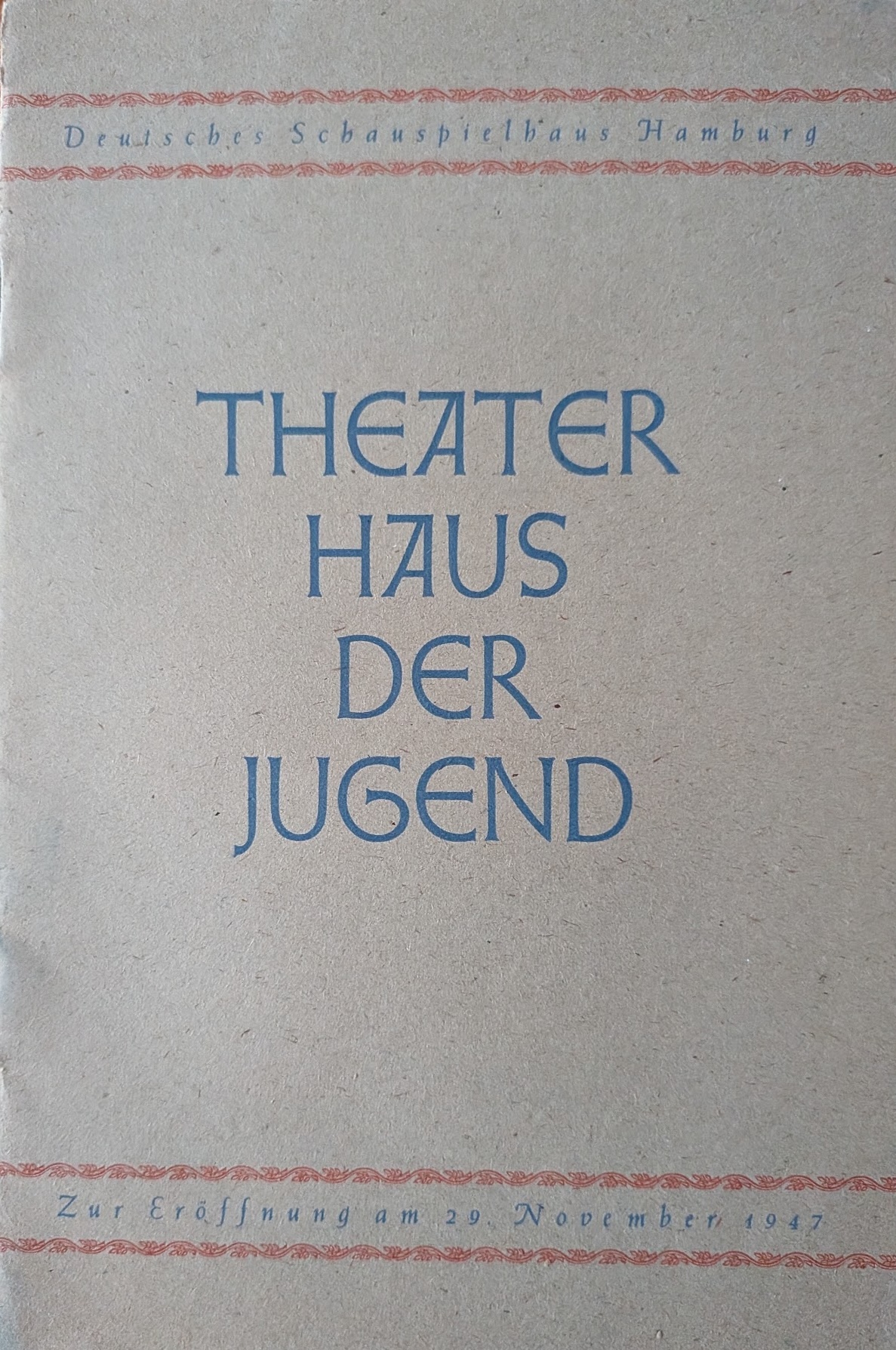
Excluded from the Kirchenallee house, Hellmer's ensemble rehearsed and performed at the Theater am Besenbinderhof — a 1,100-seat hall near the present central bus station, with serious acoustic and sightline problems that gradually wore on its audience. A second venue, the Haus der Jugend in Altona, opened only in 1947. From 20 November 1947 a third stage was added in the converted cashier's hall of an Altona bank at the corner of Catharinenstraße and Königstraße: the audience sat on backless air-raid-shelter benches, there was no cloakroom, and the dressing rooms were in the damp basement. Owing to the electricity curfew, the always sold-out performances began at 5 p.m. Despite all of it, Hellmer kept the box office steady and held the repertoire to the classical German, French and Anglo-American canon alongside the literature of exile.
Return from exile — and unwelcome
His appointment as a Jewish theater director returning from exile carried unmistakable symbolic weight in the ruins of 1946 Hamburg. It also made him, in the eyes of much of the city's upper bourgeoisie, the personified bad conscience of those who had stayed. The hostility began before he had even arrived. The acting Intendant, Rudolf Külüs, never replied to Hellmer's preparatory letters and, by the time Hellmer stepped off the train, had already fixed the artistic and philosophical line of the entire 1946/47 season. The power struggle that followed kept Hellmer from signing his contract as the sole official Intendant until five months after his arrival.
His first premiere — Büchner's Dantons Tod, which he was forced to direct himself, taking over from another director at the last moment with virtually no preparation — was torn apart in the Hamburg press. The board responded by forbidding him to direct again and confining him to administration. Sections of the cultural elite then tried to replace him with the opera Intendant Alfred Noller, a former active member of the NSDAP. Parts of the ensemble turned on him as well, and the director Heinrich Koch left Hamburg for Munich after a dispute. Friedrich Brandenburg, Willy Meyer-Fürst and Hermann Prüder, president of the Deutscher Bühnenverein, defended him in print, but could not change the atmosphere. After two seasons of trying to establish, as he put it, an objective discussion culture in Hamburg, Hellmer stepped down.
"The stage is, after all, the mirror and image of all life … but the power of good — faith, love, devotion, and once again, reverence — will and must prevail."— Ludwig Benninghoff, programme booklet, season 1946/47
Des Teufels General — the breakthrough
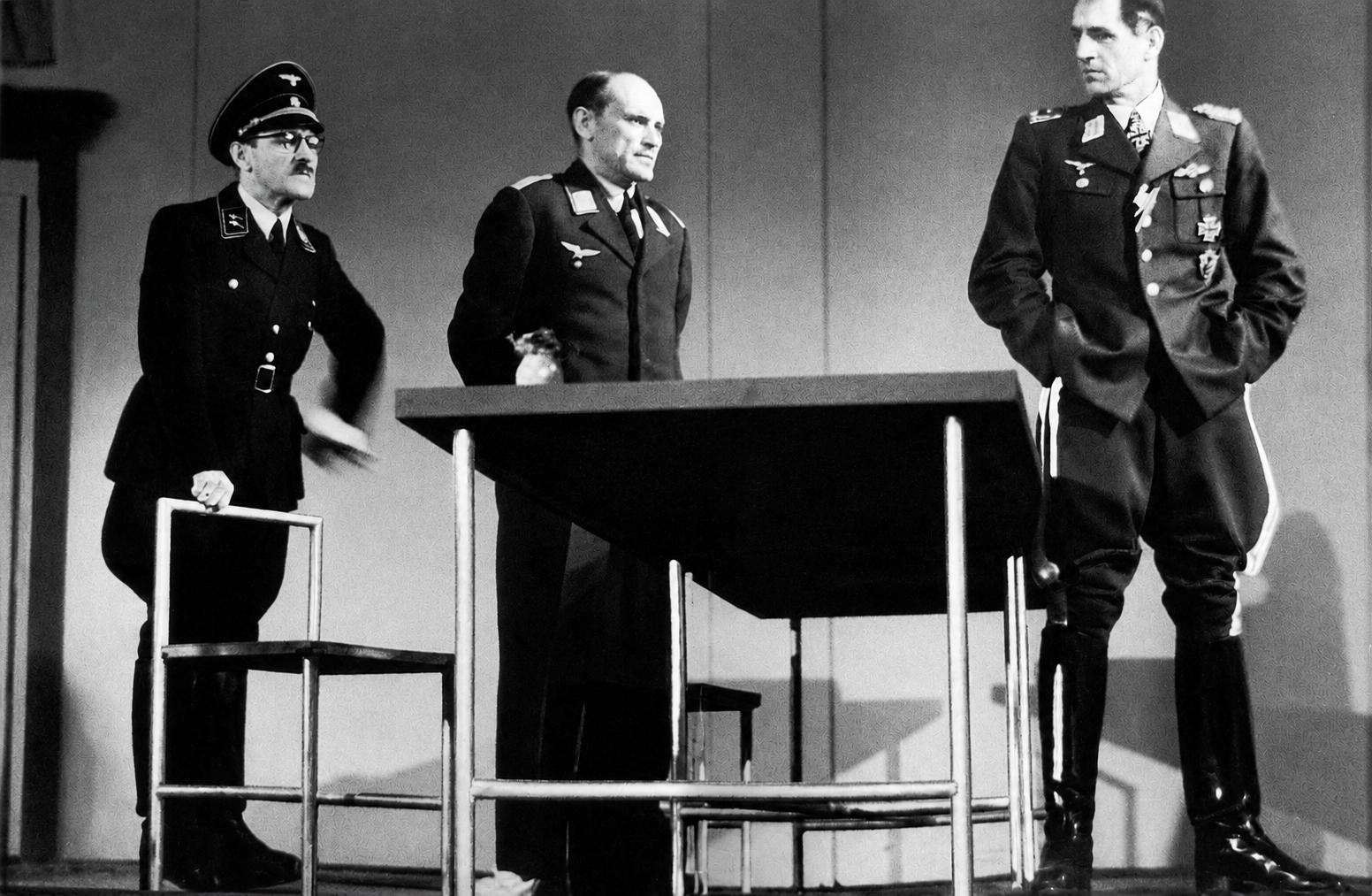
The single great success of the Hellmer years was the German premiere of Carl Zuckmayer's Des Teufels General on 8 November 1947, with Robert Meyn in the title role of General Harras. The production became an epitome of postwar German theater — a public reckoning, on stage, with guilt, rebellion and the tolerance of terror — and was widely understood as the moment in which the Schauspielhaus rejoined the front rank of European houses.
Art instead of coal
The catastrophic winter of 1946/47 brought Hamburg public life to a near-standstill. Between January and March 1947 roughly forty Schauspielhaus performances were cancelled for lack of coal and the routine power cuts; rehearsals were moved into heated rooms of the town hall and the Altona Clinic lecture theater. At the Schauspielhaus's initiative, theater people travelled to Recklinghausen and — bypassing the British military government — persuaded the König Ludwig colliery to release truckloads of coal from its "silent reserves" on the black market in exchange for theater. In June 1947 the Schauspielhaus, the Thalia and the Hamburg State Opera returned to the Ruhr with a performance financed by the city as a gesture of thanks. Mayor Brauer's enthusiasm carried the idea further: in summer 1948 the first Ruhrfestspiele Recklinghausen opened — today one of Germany's leading theater festivals — born directly out of the coal-for-art bargain struck on Hellmer's watch.
Recognition
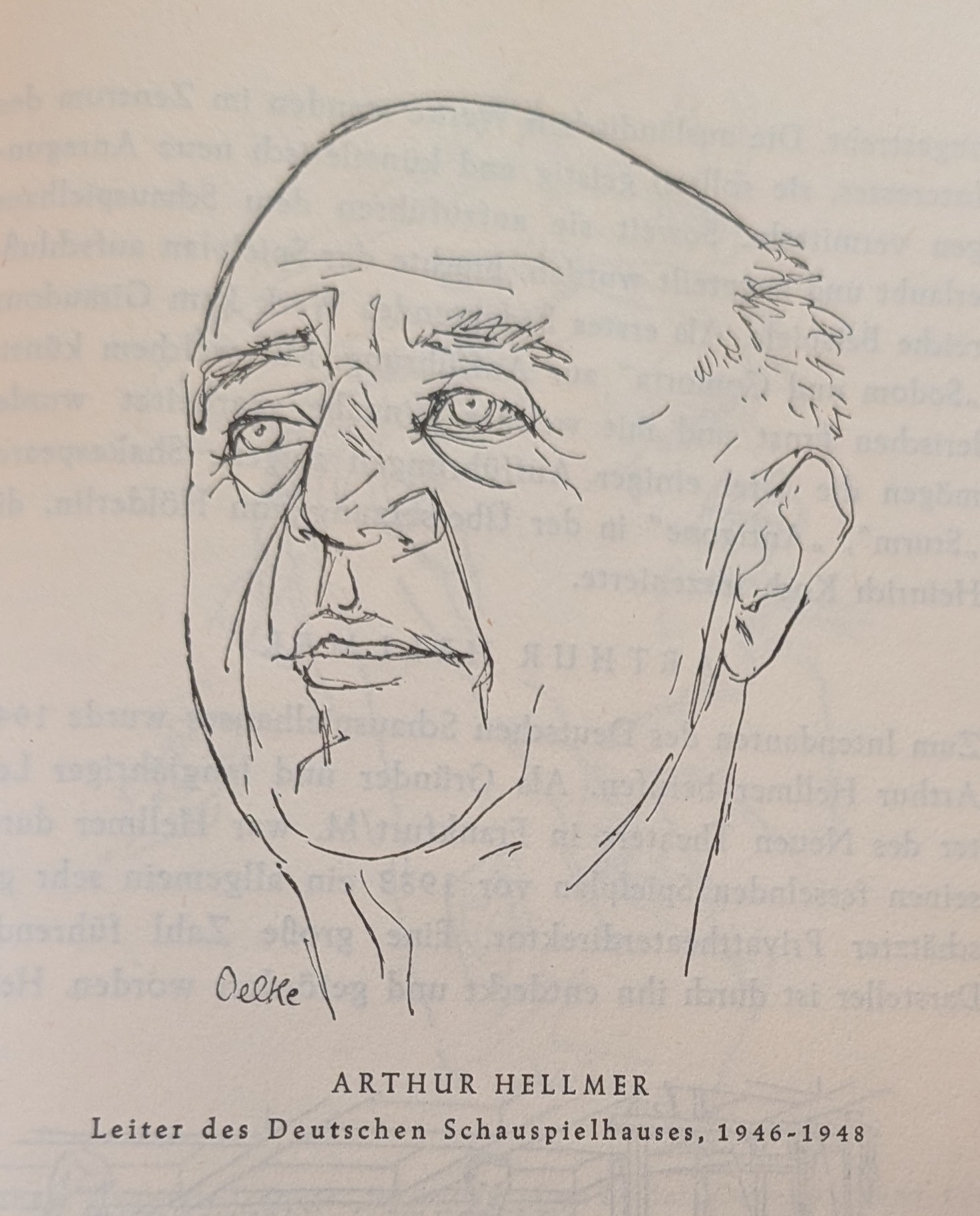
In 1955 President Theodor Heuss awarded him the Bundesverdienstkreuz (the West German Medal of Merit); the Republic of Austria conferred upon him the honorary title of Professor. Hellmer died in Hamburg on 16 January 1961 and is buried at the Ohlsdorf Cemetery.
Repertoire, season by season
German and Austrian classics beside Shakespeare, Sophocles, Russian comedy and the first postwar German premieres of Giraudoux, O'Neill and Zuckmayer. The full season-by-season list is on its own page.