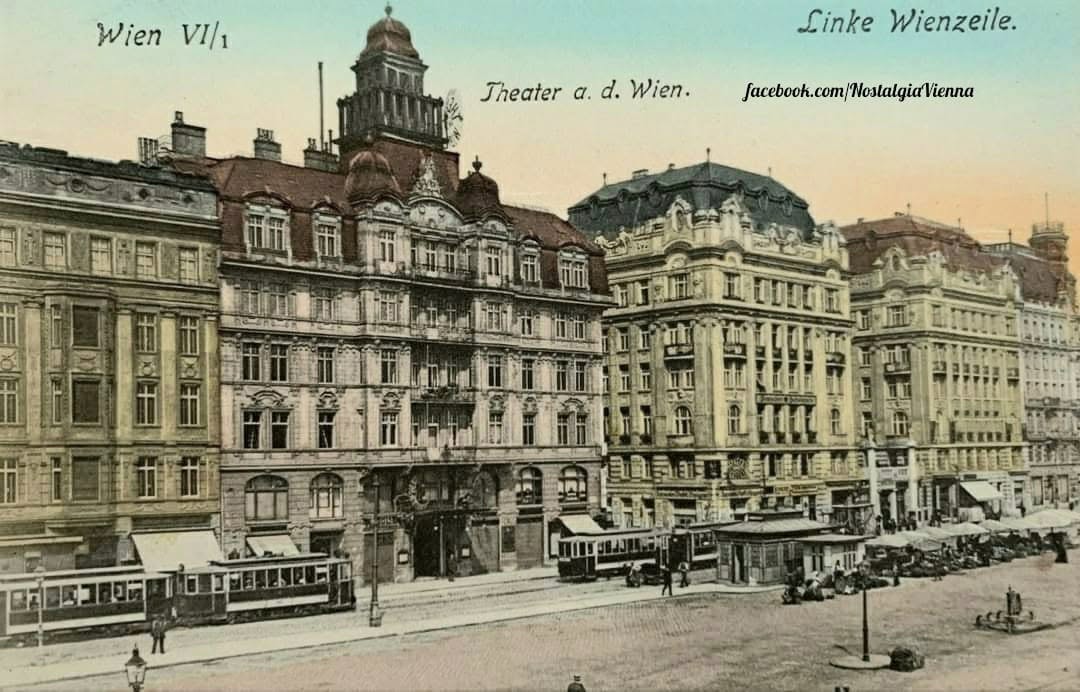
1935 — Forced out of Germany, courted in Vienna
By 1935 Hellmer was the only non-Party theatre director still running a house in Germany. A conflict with the Reich Theatre Chamber (Reichstheaterkammer) forced him out. In May, Die Stunde reported him arriving in Vienna as "one of the best-known German theatre directors," and the city buzzed with speculation that he would take over the Theater an der Wien. In the same weeks he was also floated as a candidate for the Theater in der Josefstadt, competing with Jarno-Niese, Alwin Kronacher and Erich Ziegel. On 30 August 1935 the deal was settled: a five-year lease on the Theater an der Wien, with an exit clause after the first year. Hellmer immediately set off through Czechoslovakia, Switzerland and Germany to recruit actors, designers and directors — notably signing Max Ophüls.
1936 — The relaunch, and discovering Zarah Leander
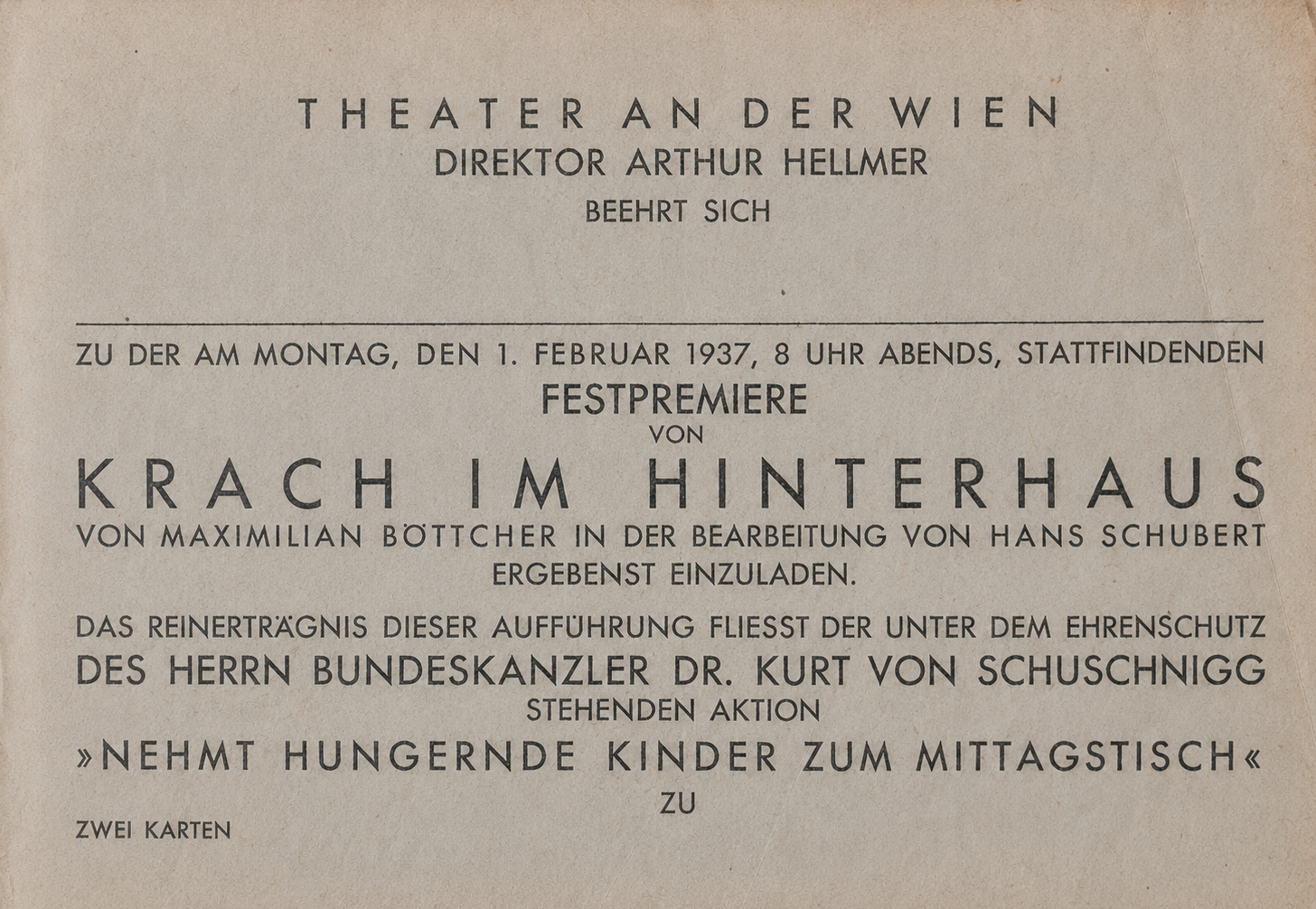
Die Stunde framed the takeover as a "gebürtiger Wiener" coming home with a reputation built in Frankfurt. His stated mission was to pull the house away from the operetta-only formula of recent years and restore its old "mixed," distinctly Austrian repertoire. The opening production, Axel an der Himmelstür, was explicitly presented as a play testing real dramatic acting rather than a vehicle for Ralph Benatzky's music — and its cast marked the German-stage debut of Zarah Leander opposite Max Hansen. Later that year Hellmer staged Neun Offiziere, a Boxer Rebellion drama with Attila Hörbiger (later recast with Karola Neher), and Krach im Hinterhaus with Friedl Czepa and Gisela Werbezirk.
1937 — A star-studded ensemble
By 1937 Der Wiener Film could list an ensemble that read like a who's-who of the era: Rosy Barsony, Friedl Czepa, Käthe Dorsch, Max Hansen, Attila Hörbiger, Oskar Karlweis, Liesl Karlstadt, Leopoldine Konstantin, Theo Lingen, Christl Mardayn, Paul Morgan, Hans Schott-Schöbinger and Otto Wallburg — with Max Ophüls again among the directors.
Early 1938 — Right up to the edge
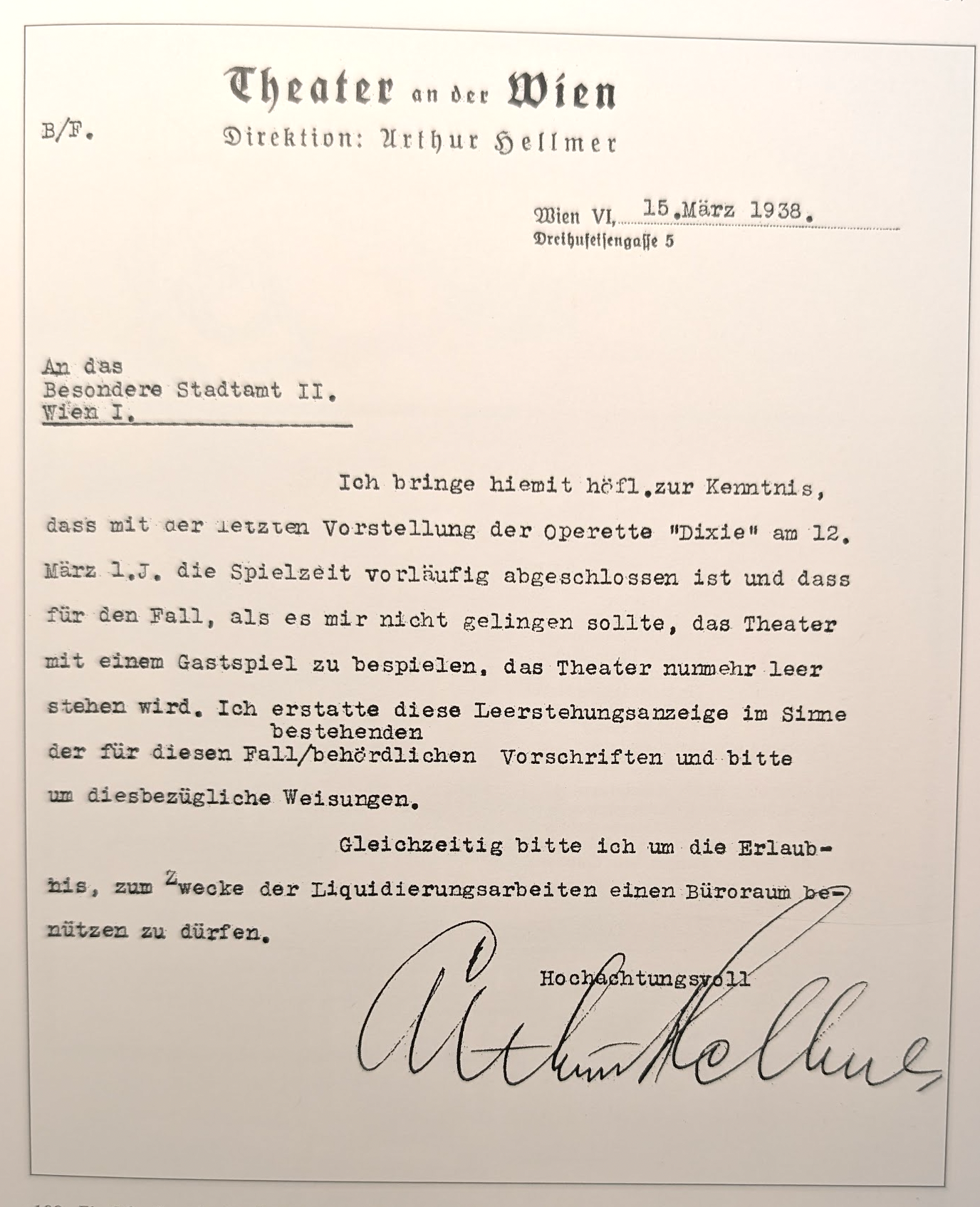
A Telegraf clipping from 9 March 1938 — just three days before the Anschluss — shows business as usual: the lease had been renewed, and a new Richard Tauber operetta was planned, delayed only because Tauber and Hansen were on tour in Australia. Then everything changed. Later that month the Völkischer Beobachter published a vicious antisemitic attack that named "der Frankfurter Jude Arthur Hellmer," twisting his very successes — discovering Leander, his Frankfurt-honed literary premieres — into an accusation of Jewish influence over Viennese culture. That was the moment his Vienna career ended — by force, not choice.
Three days after German troops entered Vienna, Hellmer was stripped of his position and of his ownership stake in the Theater an der Wien and — in an act of public humiliation — forced to scrub by hand the piles of shoes heaped on the pavement in front of the house. He was arrested soon afterwards and imprisoned. After the November pogrom he sold the Neues Theater in Frankfurt and went into exile, sailing from Genoa to Southampton on 6 July 1939.
These two Viennese seasons make Hellmer one of the very last Jewish theater directors in the German-speaking world before the war. In London he would carry the tradition forward as co-founder of Die Österreichische Bühne (1942), the Austrian exile stage — a direct continuation of the Viennese repertoire snuffed out on Linke Wienzeile.
Two seasons — a final flowering
Wien Geschichte Wiki calls Hellmer's directorship "eine letzte Blüte" of the great Viennese operetta tradition. Musical direction was in the hands of Anton Paulik, the house conductor since 1921.
Axel an der Himmelstür — the premiere that launched a star
The 1 September 1936 world premiere of Axel an der Himmelstür was the most consequential night of Hellmer's Viennese tenure. Ralph Benatzky's Hollywood-set musical comedy — a satire of film-studio politics, unapproachable divas and ruthless paparazzi — was cast at the last minute with an unknown Swedish contralto. Liane Haid had originally been slated for the role of Gloria Mills; when she withdrew, Max Hansen (already booked as the reporter Axel Swift) recommended a singer he had heard on tour in Scandinavia. Benatzky auditioned Zarah Leander, re-wrote and transposed the score to suit her deep alto voice, and opened the show.
The result was an overnight sensation. The Neue Freie Presse called Leander the "Greta Garbo of operetta." The show's score was deliberately cosmopolitan — a languorous blues ("Gebundene Hände"), a tango ("Gute Nacht"), foxtrots, and the manic yodel number "In Holly-Holly-Hollywood" — with only one traditional Viennese waltz. Paul Morgan, co-author of the libretto, appeared on stage himself as the chief producer Cecil McScott. After 100 consecutive performances, Leander left for a film contract with Ufa; her songs from the show became staples of her concert repertoire for decades.
Roxy und ihr Wunderteam — the football operetta
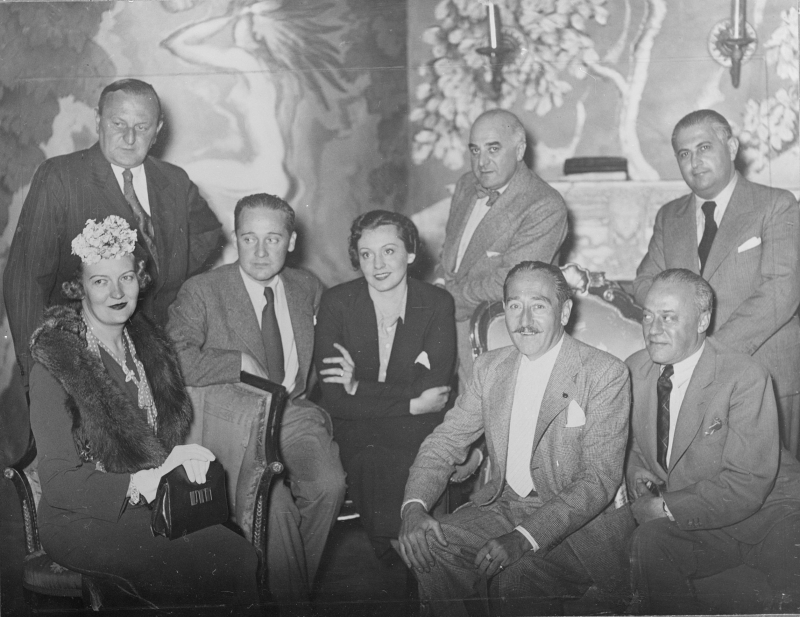
On 25 March 1937 Hellmer mounted the German-language world premiere of Paul Abraham's Roxy und ihr Wunderteam — the first and still most famous Fußball-Operette. Abraham, the Hungarian-Jewish composer of Viktoria und ihr Husar and Ball im Savoy, had already had the work premiered in Hungarian in Budapest the previous December as 3:1 a szerelem javára. For Vienna, Alfred Grünwald and Hans Weigel re-wrote the libretto and lyrics around the Hungarian national football side — the "Wunderteam" that had stunned Europe at the 1934 World Cup — and the headstrong Scottish heiress Roxy who falls for its centre-forward.
The Viennese cast was led by the Hungarian operetta couple Rosy Barsony and Oscar Denes, with Fritz Imhoff and Hans Olden in the comic roles. Anton Paulik conducted. The score's hit numbers — "Bin verliebt", "Heute Nacht hab' ich geträumt von dir" and the rousing team march — circulated on record and radio long after the Anschluss silenced both the composer and the production. Abraham fled via Paris and Cuba to New York; his works were banned in the Reich within a year of this premiere.
Madame Sans-Gêne — Sardou turned into a musical comedy
For the autumn of 1937 Hellmer commissioned a wholly new version of Victorien Sardou's Napoleonic comedy Madame Sans-Gêne: Hans Weigel re-cast the piece as a "musical comedy in three acts" with an original score by the Berlin-born composer Bernard Grün. It opened on 5 October 1937 with Christl Mardayn as Catherine Hübscher, the plain-speaking Alsatian laundress who becomes Duchess of Danzig — opposite Leo Reuss as Napoleon, Leopold Biberti as Marshal Lefebvre, Emil Stöhr as Count Neipperg and Kurt von Lessen as Fouché. Anton Paulik conducted; Dr. Fritz Judtmann designed sets and costumes; the act-curtain was painted from a sketch by Lisl Weil. The production ran into early November and handed its slot directly to the world premiere of Pam-Pam.
Pam-Pam — a charity world premiere
On 3 November 1937 the house gave the world premiere of Pam-Pam, a musical comedy in seven scenes by Max Kolpe with music by Fritz Spielmann and Stephan Weiss, staged as a Festvorstellung zugunsten der Winterhilfe(gala in aid of the winter relief). The Norwegian actress and singer Kirsten Heiberg headed the cast, with Erich Dörner, Franz Engel, Emil Stöhr and Hans Unterkircher.
Theater für junge Leute
Inside the house Hellmer also ran a Theater für junge Leute — a children's-theater matinee series. Its first production was Wir spielen Max und Moritz!, adapted from Wilhelm Busch by Hans Burger with music by Gino Smart, dances by Maru Kotrera and drawings after Busch by Richard Erdös. Evi Bodo played the seven-year-old Helene; Peter Preses her favourite cousin Fridolin.
Repertoire — premieres & closure
Two seasons of comedy, Volksstück and operetta — from the January 1936 opener Frühling im Wienerwald to the Anschluss closure. The full season-by-season chronology is on its own page.
Browse the full repertoire, season by season →
Cast sheets — from the family archive
Five original Besetzungszettel (cast sheets) and playbills survive from Hellmer's directorship, all printed by Elbemühl in Vienna's ninth district and distributed in the foyer of the house on Linke Wienzeile 6.
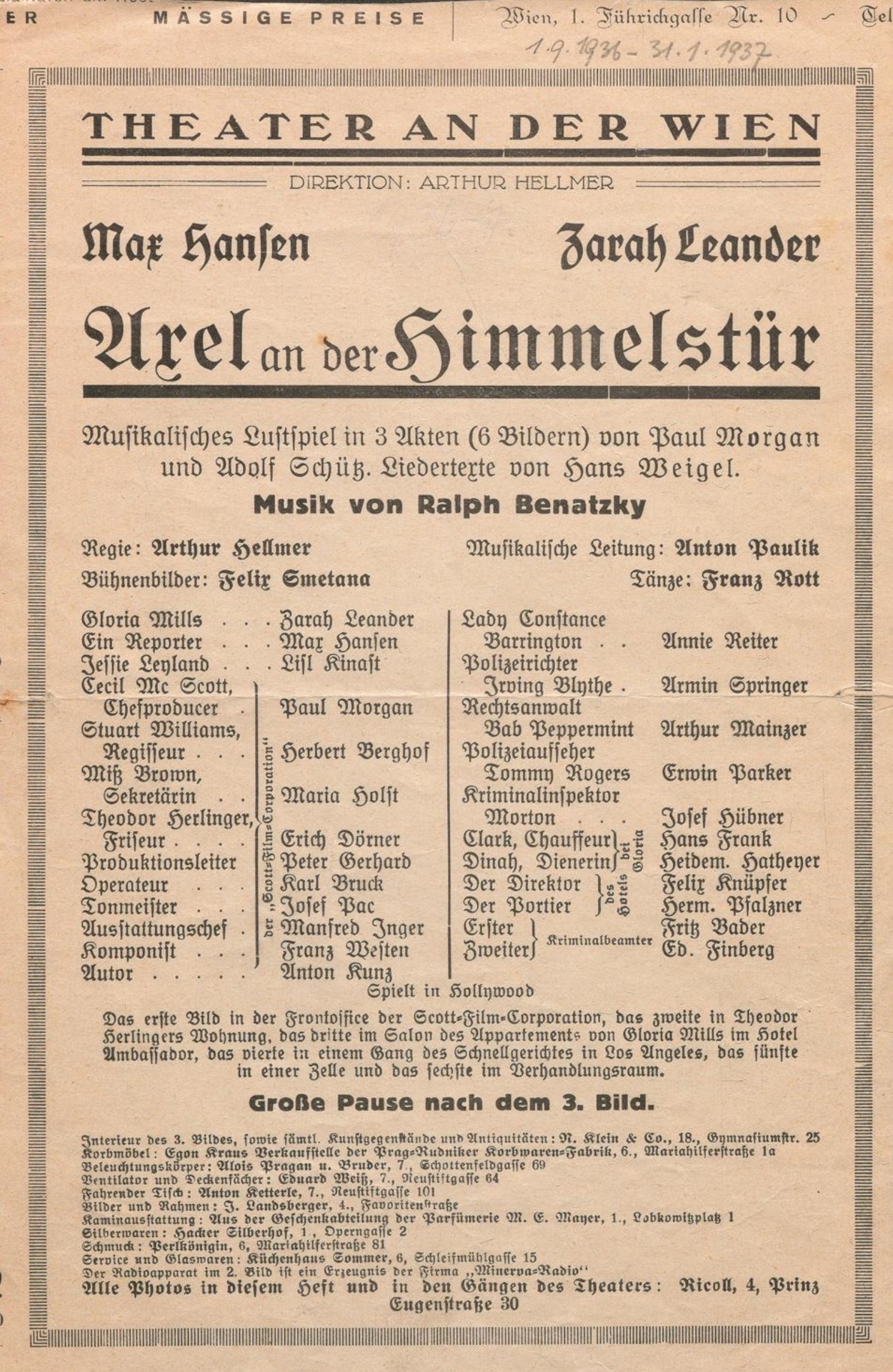
Axel an der Himmelstür
1 Sept 1936 – 31 Jan 1937
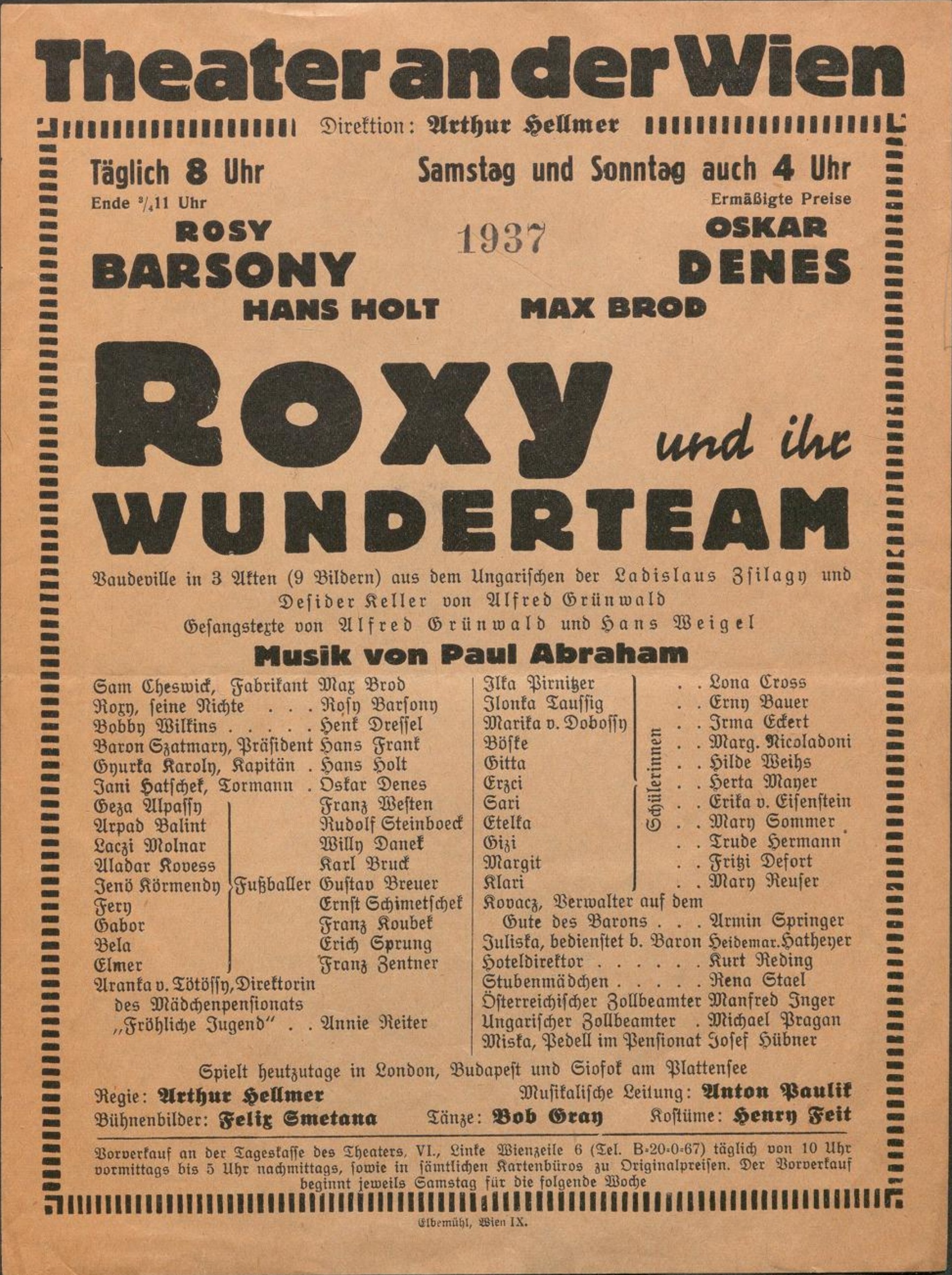
Roxy und ihr Wunderteam
Season 1937 · Besetzungszettel
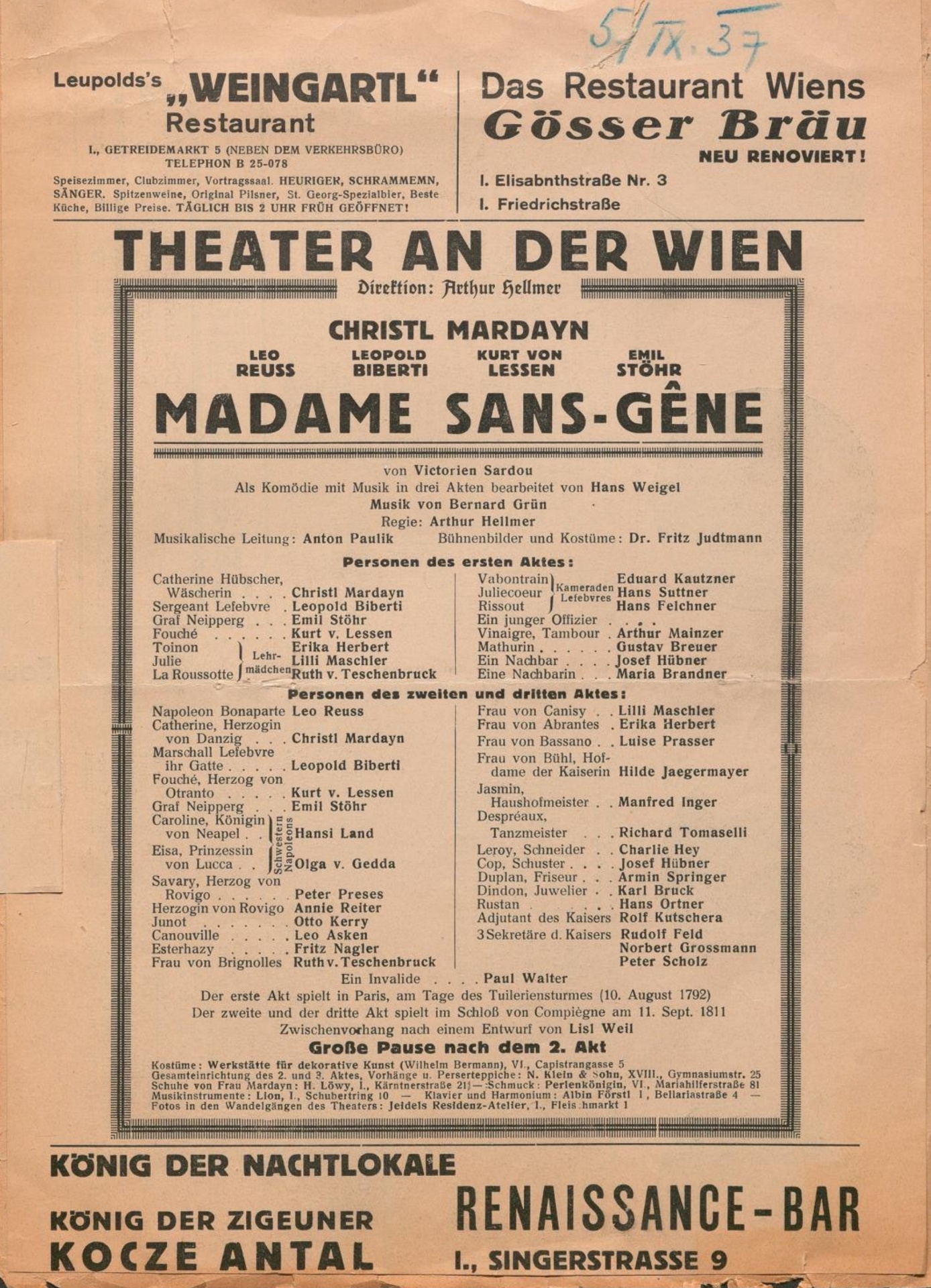
Madame Sans-Gêne
5 October 1937
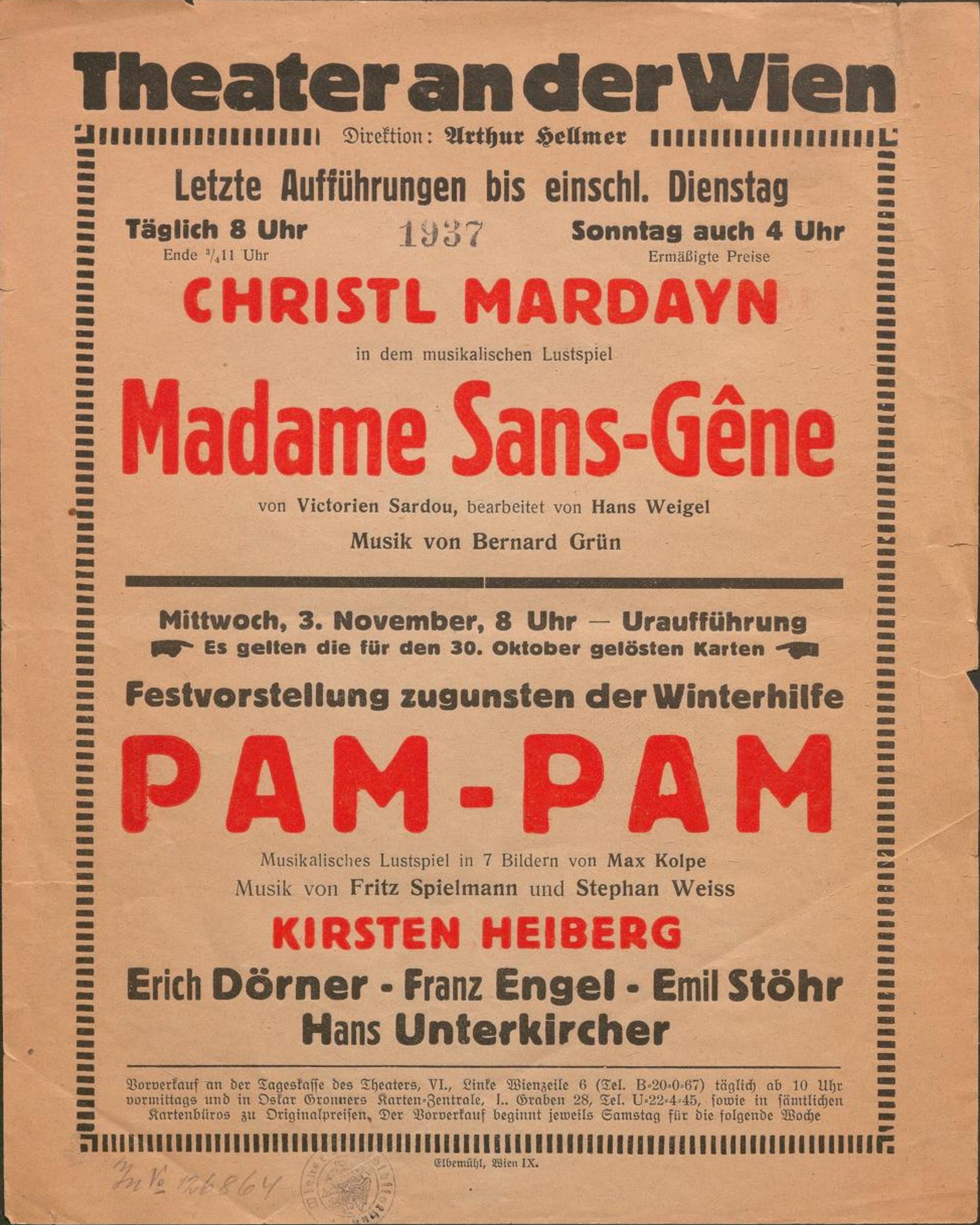
Pam-Pam · Festvorstellung Winterhilfe
Uraufführung 3 November 1937
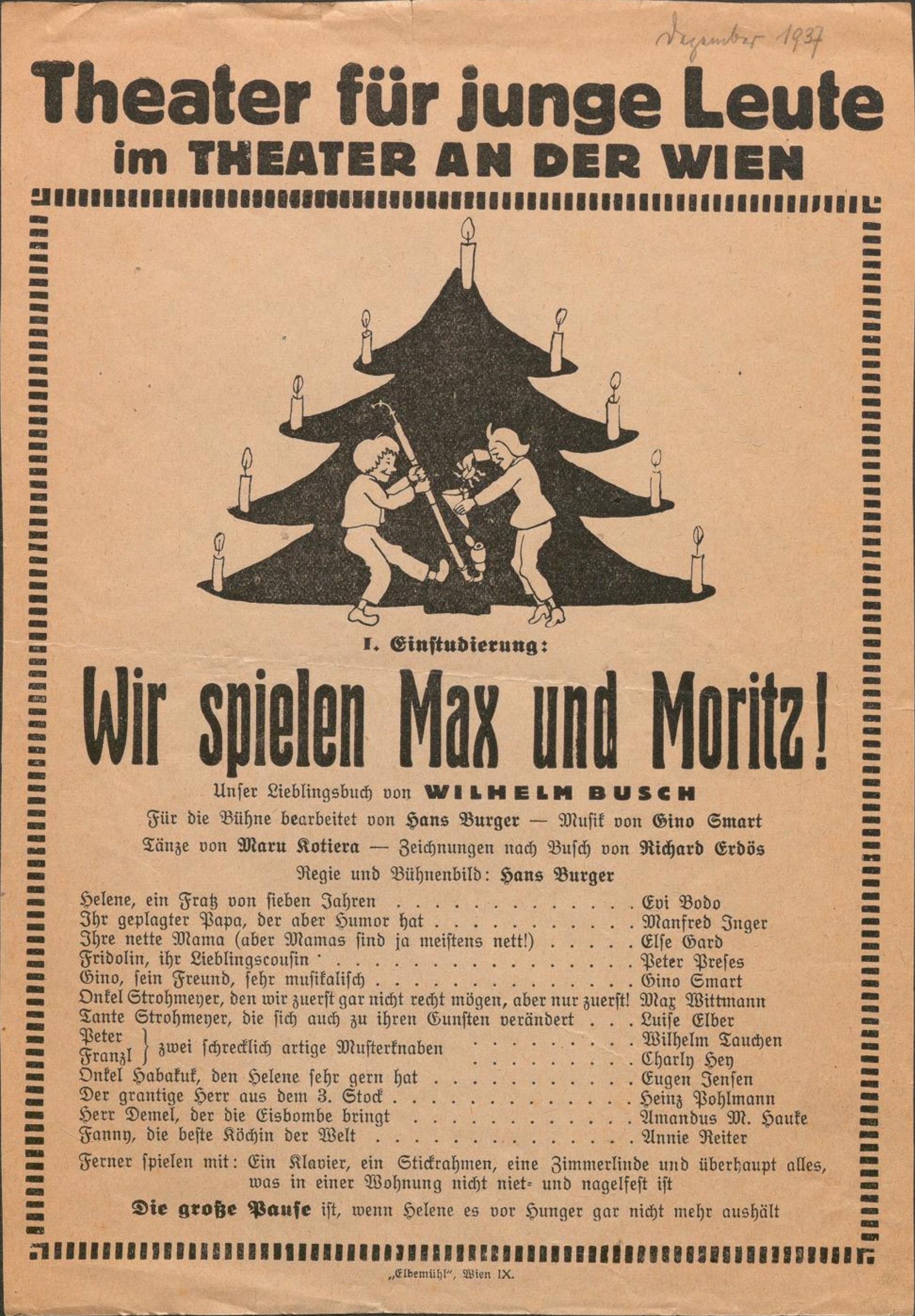
Theater für junge Leute — Wir spielen Max und Moritz!
Season 1937/38
Cast sheets & playbills 1936–1937 — Konvolut Besetzungszettel, Theater an der Wien, Hellmer family archive.